The Medusa Nebula
Model: gpt-4.1
Prompt version: 1.0
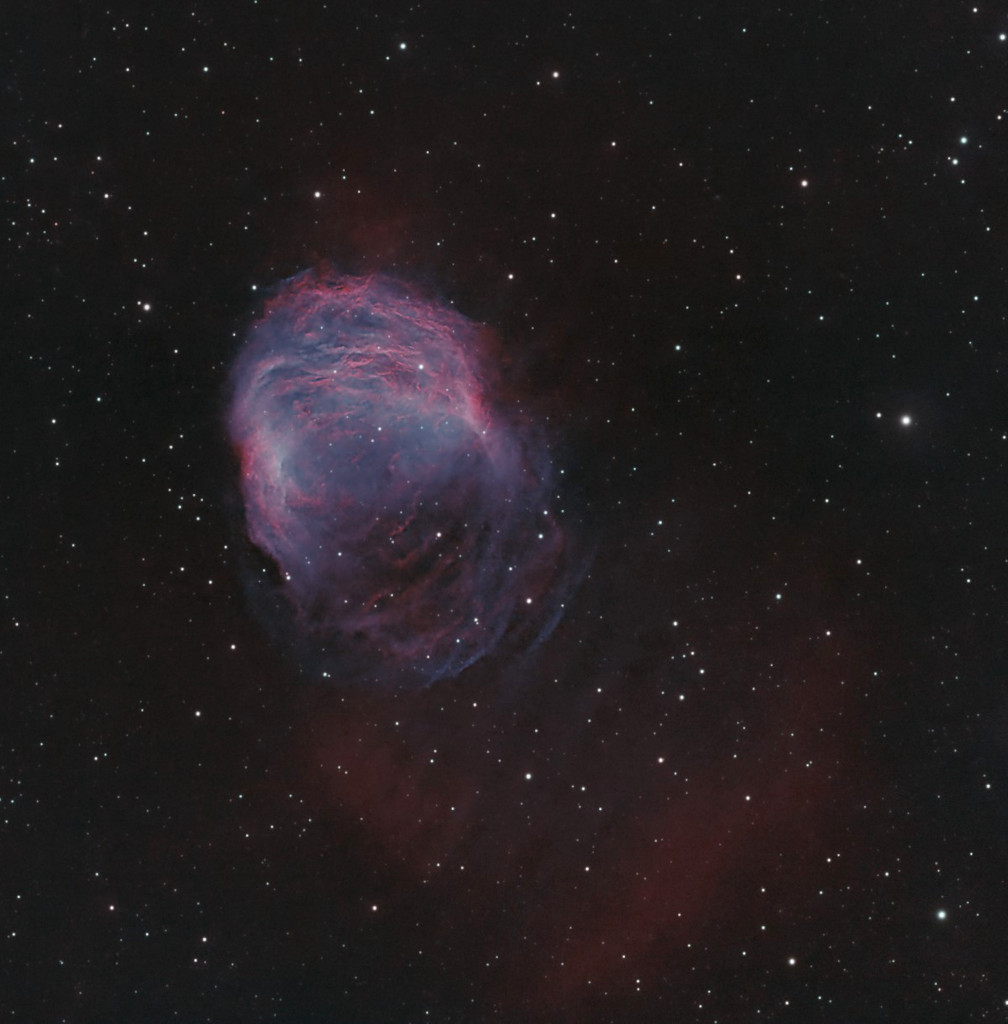
Braided and serpentine filaments of glowing gas suggest this nebula’s popular name, Medusa Nebula. Also known as Abell 21, this Medusa is an old planetary nebula some 1,500 light-years away in the constellation Gemini.
Like its mythological namesake, the nebula is associated with a dramatic transformation. The planetary nebula phase represents a final stage in the evolution of low mass stars like the sun as they transform themselves from red giants to hot white dwarf stars and in the process shrug off their outer layers. Ultraviolet radiation from the hot star powers the nebular glow.
The Medusa’s transforming star is the faint one near the center of the overall bright crescent shape. In this deep space telescopic view, fainter filaments clearly extend below and right of the bright crescent region. The Medusa Nebula is estimated to be over 4 light-years across, truly an astronomical wonder in the night sky and a favorite subject of astrophotography.
The structure is also a beautiful example of cosmic dust and celestial transformations unfolding hundreds of light-years from Earth.